
Explore the History and Heritage of Featherstone Rovers
Post Office Road
When local bar-man George Johnson first formed the club in 1902 it was with the generous help of the Railway Hotel landlord Charles Umpleby that a suitable ground was found. Umpleby owned some land beyond Featherstone Moor Farm off Post Office Road and a pitch was marked out. It was referred to as the Athletic Grounds. Although it was initially little more than two farm fields joined together.
After disbanding in 1906, Featherstone Rovers reformed in 1908, playing once again on the Athletic grounds. After the 1911/2 season Rovers merged with the Featherstone NUFC team who were based at the Featherstone Hotel, and for the following year the club played at the Featherstone Main Colliery Athletic Club ground, which was adjacent to the cricket fields beyond the Railway End. The year after, they moved back to the Athletic Grounds at Post Office Road.
After World War One, Rovers set about establishing themselves as the best junior club in the country and aimed for promotion to the Northern Union. This involved getting the ground up to scratch and some ‘banking up’ was done to create sloped shale terracing around all four sides of the pitch. A temporary covered enclosure was erected where the main stand now is. When Rovers were granted senior status in 1921 more ‘banking up’ work was done and new dressing rooms and baths were installed.
In 1925 the club applied to the RFL for a loan to build a main stand. The RFL loaned the club £1,500 and the club itself raised £1,000 from various supporters groups, sponsors and collieries. The wooden construction with steel supports was built in 1926 at a time of great economic hardship for the area. Thousands of miners at all the local collieries were on strike in protest at conditions and pay. With nothing else to do, many sat on the pitch during the long summer and watched the stand’s construction. Fans were allowed into the stand for free on its opening day to test its capacity. That RFL loan was finally paid off in 1960.
When Abe Bullock of B&S buses became club president in 1937 he paid for the construction of a new covered enclosure on the opposite side of the pitch to the main stand. This was principally to be used by children. In the early 1950s this was demolished and replaced in 1953 by the famous Bullock Stand (or “Shed” to many). As part of the cup-run in 1952 more work was done by volunteers to install terracing at the Railway End.
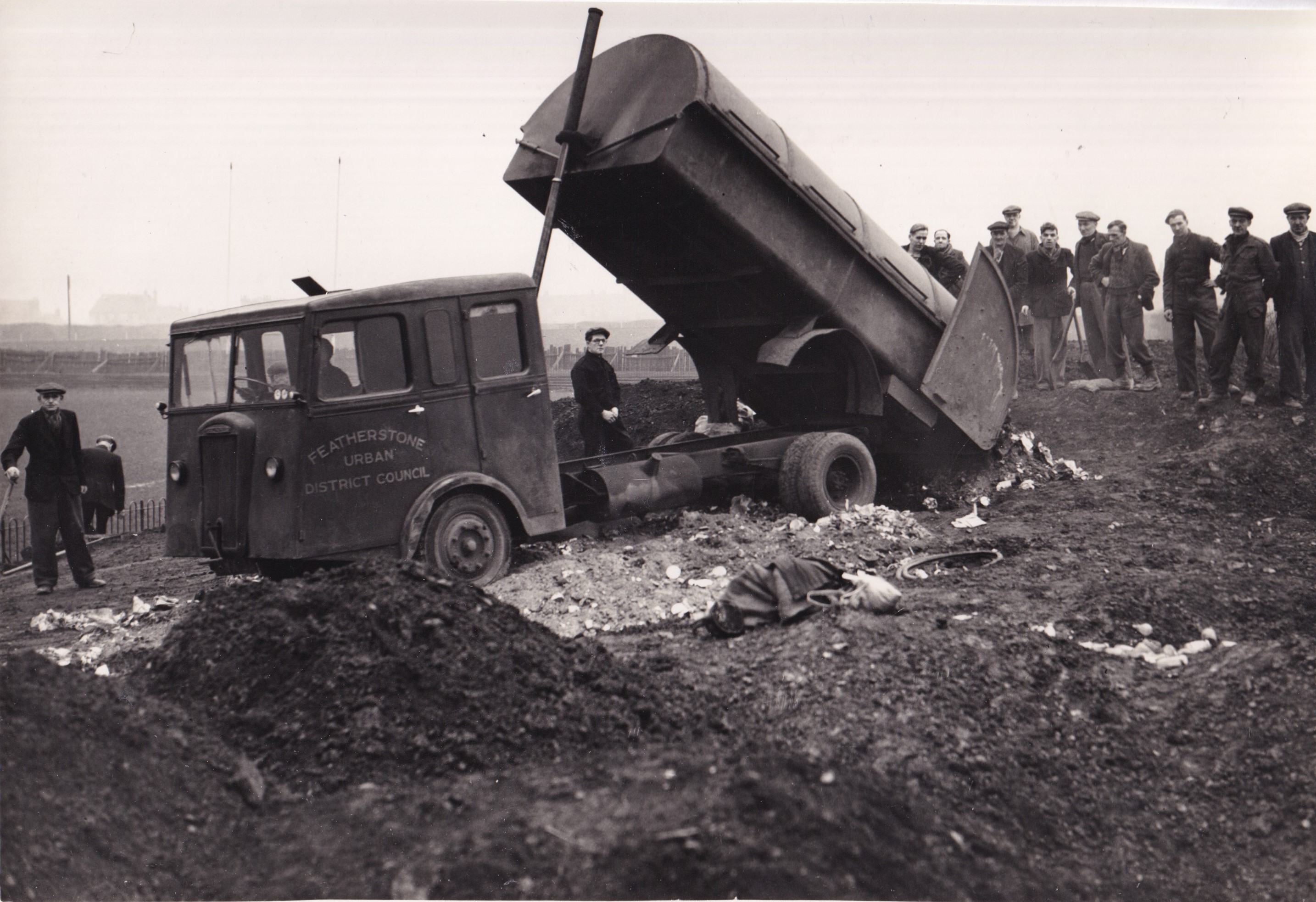

The ground then remained largely unchanged for decades during which period most of Rovers 10,000 home attendances were recorded. It was in March 1959 when an astonishing 17,531 people crammed into the ground to see Rovers knock St. Helens out of the Challenge Cup at the quarter final stage. Still the club’s record attendance, Featherstone can proudly claim to be one of the very few, perhaps only professional sports club to have an attendance record higher than the population of the town. In January 1962 a record league fixture attendance was set, 14,990 saw a game versus Wakefield.
Rovers were one of the last top clubs to install floodlights. Bought from Hunslet, they were ‘switched on’ in October 1983 after supporters raised £20,000 to have them erected. They have been upgraded various times since then, most recently prior to the 2017 season.
Then, just after the end of another crippling Miners’ strike, the main stand was badly damaged by fire in March 1985 and had to be demolished. In its place came the new modern structure we have today, formally opened in August 1986. The clubhouse, gym and changing rooms were inaugurated the following year.
When Richard Budge of RJB Mining became Vice President, he paid for the construction of the Family stand on the site of the old Bullock stand. At that time, the ground adopted for the first time a sponsor’s name, and became known as the Lionheart Stadium. Our home is now known as the Millenium Stadium as naming rights have developed into another revenue stream in the 21st century.
In 2013, a group of fans and volunteers led by Paul Coventry began an ambitious project to dismantle, transport and reconstruct two stands from the defunct Scarborough Football Club ground to the Railway End of the stadium to replace the open terracing there. These wonderful additions, together with business units installed behind the 70m stand, and a multi gym indoor training facility built behind the family stand, have continued the story of the Stadium’s evolution.

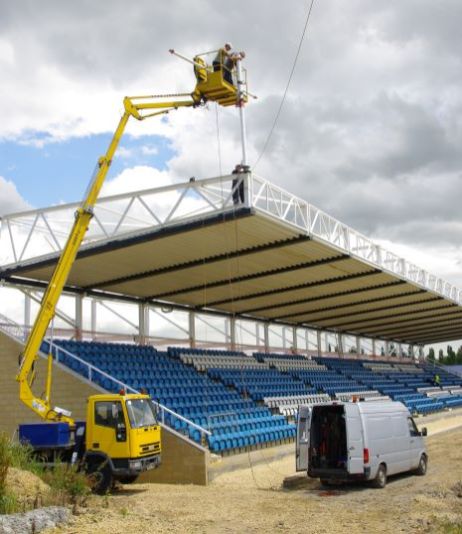
The outstanding work of the volunteers is part of a long tradition of the fans’ involvement with the upkeep and growth of the stadium, through the countless repairs, improvements and donations a variety of supporters groups have made throughout our history. Just one example is the Freddie Miller gate, which was first built in 1961 and is now nicely incorporated into the new reception.
What our ground has always had, and kept through this current period of renovation, is endless charm, a glorious history and a real sense of tradition. Away fans always remark that ours is a "proper Rugby League stadium", not a flat pack IKEA kit of a ground, nor a dilapidated relic from Victorian times. A home built and maintained with love and care by its loyal occupants.
More detail on stadium development and other events that have occurred at the ground can be found here